
Símbolos Taínos y Sus Significados: Una Guía del Arte Indígena del Caribe
Comprendiendo los símbolos taínos
Los símbolos taínos son más que diseños decorativos. Son expresiones visuales de identidad, espiritualidad y conexión con la naturaleza. Mucho antes de la introducción del lenguaje escrito en el Caribe, los taínos comunicaban ideas, creencias e historias a través de tallas, arte rupestre, cerámica y objetos ceremoniales. Estos símbolos a menudo se grababan en cuevas, piedras y espacios sagrados de La Española y otras islas del Caribe, dejando un lenguaje visual que todavía hoy nos habla. Para los taínos, el arte no estaba separado de la vida diaria. Los símbolos representaban fuerzas de la naturaleza, seres espirituales, ancestros y elementos que daban forma a la existencia. Cuando vemos estas tallas hoy, estamos viendo mensajes de los primeros pueblos del Caribe, conservados en piedra y transmitidos a través de generaciones.

El símbolo del sol
Uno de los símbolos taínos más reconocidos es el sol, a menudo representado con una cara circular y líneas radiantes. El símbolo del sol representaba vida, poder y continuidad. En una sociedad agrícola, el sol era esencial para los cultivos, las estaciones y la supervivencia. Simbolizaba la energía y el ritmo de la naturaleza. Hoy, el sol taíno sigue siendo uno de los símbolos indígenas caribeños más reproducidos. Aparece en el arte, la joyería y los diseños culturales como una forma de honrar las raíces ancestrales y celebrar la vida. Su forma simple pero poderosa lo hace significativo y visualmente impactante.
La rana Coquí
La rana coquí es otro símbolo importante en el arte taíno. Aunque hoy se asocia especialmente con Puerto Rico, la rana tenía un significado espiritual en toda la cultura taína. Representaba la fertilidad, la transformación y el ciclo de la vida. Como las ranas están estrechamente conectadas con el agua y la lluvia, simbolizaban la renovación y el crecimiento.
El símbolo del coquí a menudo aparece en tallas con formas redondeadas y rasgos expresivos. Refleja la creencia taína de que los animales estaban profundamente conectados con el mundo espiritual. La naturaleza no estaba separada de la humanidad; era parte del mismo sistema vivo.
Las figuras de Cemí
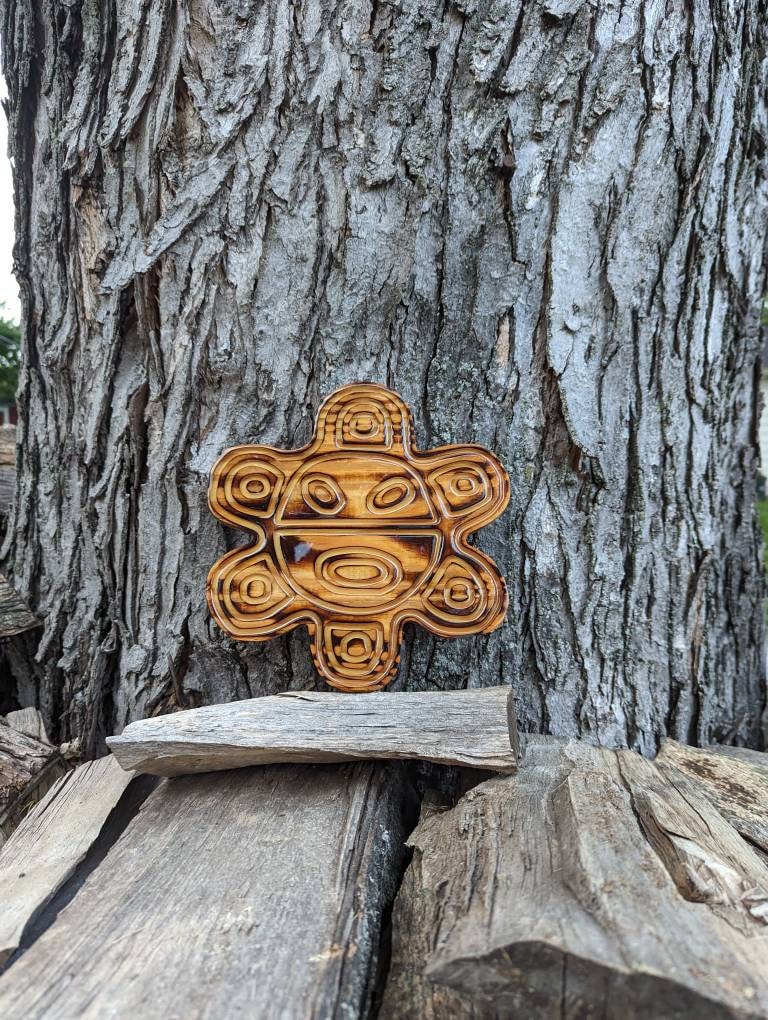
Los cemís eran figuras espirituales sagradas que representaban dioses, ancestros o espíritus protectores. Estas figuras eran talladas en piedra, madera, concha o hueso y eran tratadas con reverencia. Los símbolos cemí a menudo tienen formas triangulares con caras talladas y ojos expresivos, representando la presencia y el poder espiritual. El cemí no era solo un objeto. Se creía que poseía energía y guía espiritual. Los líderes y las familias guardaban cemís en sus hogares o los usaban en ceremonias. Hoy en día, los diseños inspirados en cemís son comunes en el arte y la joyería caribeños como símbolos de protección y conexión ancestral.
Espírales y patrones geométricos
Muchos símbolos taínos incluyen espirales, círculos y formas geométricas repetitivas. Se cree que estos patrones representan ciclos de vida, movimiento y continuidad. La espiral en particular simboliza la energía y el flujo natural de la existencia. Estos diseños a menudo aparecen en los petroglifos de las cuevas de la República Dominicana, mostrando cuán profundamente el simbolismo estaba incrustado en la cultura taína. Los patrones geométricos no eran una decoración aleatoria. Tenían un significado y reflejaban una cosmovisión centrada en la armonía entre los humanos y la naturaleza. Incluso hoy en día, estos patrones inspiran a los artesanos dominicanos contemporáneos que incorporan motivos taínos en joyas, artesanías y arte visual.
Símbolos taínos en la cultura dominicana moderna
Los símbolos taínos continúan influyendo en el arte y el diseño en toda la República Dominicana. Aparecen en joyería artesanal, murales, textiles y marcas culturales. Muchas personas usan piezas inspiradas en los taínos como una forma de honrar el patrimonio indígena y reconectarse con la identidad ancestral. Estos símbolos representan la resiliencia. A pesar de la colonización y siglos de cambio, la herencia taína no desapareció. Vive en el idioma, la comida, los topónimos y la expresión artística. Al comprender los símbolos taínos y sus significados, obtenemos una apreciación más profunda de las raíces indígenas de la cultura caribeña.

Por qué el arte taíno sigue siendo importante
Los símbolos taínos no son solo artefactos históricos. Son expresiones vivas de la identidad caribeña. Nos recuerdan que antes de la colonización, las islas tenían sociedades ricas con sistemas de creencias complejos y tradiciones artísticas. Conectan a las comunidades caribeñas modernas con su pasado indígena.
Cuando ves un sol taíno, una figura cemí o una espiral tallada en piedra, estás presenciando una historia que ha sobrevivido siglos. Estos símbolos continúan inspirando orgullo, creatividad y conciencia cultural en toda la República Dominicana y más allá.